factory
How Embraer And Adani Plan To Build India’S Regional Aircraft Industry
By Manufacturing Today•February 04, 2026•4 min read
Manufacturing Today•February 04, 2026•4 min read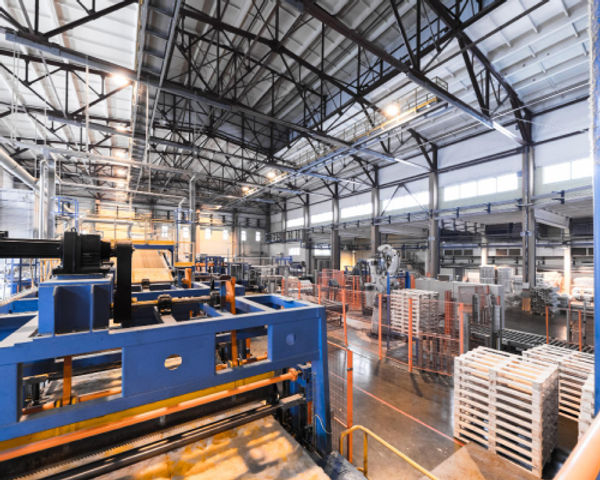
Subscribe to our free newsletter today to keep up to date with the latest manufacturing news.
India’s aviation market is expanding at a pace that few global manufacturers can ignore. Passenger demand continues to grow across primary hubs and secondary cities, while government policy increasingly favors domestic manufacturing in strategic sectors. Against this backdrop, Embraer’s memorandum of understanding with Adani Defence & Aerospace signals a shift in how regional aircraft manufacturing could develop in India.
Rather than focusing narrowly on final assembly, the partnership outlines a broader industrial framework. The objective is to establish an integrated ecosystem that includes aircraft assembly, local supplier development, maintenance infrastructure, training capabilities, and long term support services. If executed as planned, the initiative would represent India’s first commercial passenger aircraft assembly line and a meaningful step toward deeper participation in the global aerospace value chain.
The Embraer Adani collaboration reflects a deliberate move away from transactional manufacturing models. The plan centers on phased localization, beginning with aircraft assembly and gradually increasing domestic content over time. This approach aligns with India’s industrial policy framework, which emphasizes incremental capability building rather than immediate full localization.
Embraer brings decades of experience designing and producing regional aircraft for commercial, defense, and special mission applications. Adani Defence & Aerospace contributes infrastructure access, regulatory familiarity, and established relationships within India’s industrial and policy environment. Together, the companies aim to create conditions that allow Indian suppliers to integrate into aerospace programs that demand high reliability, traceability, and quality control.
This structure matters because aerospace manufacturing depends as much on process discipline and certification as it does on physical production. By embedding these standards early, the partnership increases the likelihood that Indian suppliers can compete for work beyond the domestic market.
Regional aircraft play a specific role in aviation systems. They connect smaller cities to major hubs, support thinner routes, and improve aircraft utilization across networks. In India, this segment is particularly relevant due to the geographic spread of demand and the limited capacity of ground transport in many regions.
Government initiatives focused on regional connectivity have expanded the number of operational routes serving tier two and tier three cities. These routes often require aircraft that balance range, capacity, and operating economics. Regional jets and turboprops are designed for exactly this purpose.
Establishing domestic assembly and support capability for these aircraft offers structural advantages. It shortens supply chains, improves access to spare parts and technical support, and reduces lifecycle costs for operators. Over time, it also enables closer feedback loops between manufacturers and local airlines, improving aircraft configuration and performance in Indian operating conditions.
The scope of the Embraer Adani initiative extends across several layers of the aerospace value chain. Planned elements include final aircraft assembly, supplier qualification and development, maintenance and repair operations, pilot and technician training, and long term sustainment services.
Each of these components addresses a different bottleneck in India’s current aviation infrastructure. Maintenance and repair capacity, for example, remains limited relative to fleet growth, leading many operators to rely on overseas facilities. Training infrastructure faces similar constraints as airlines add aircraft faster than skilled personnel can be certified.
By addressing these gaps in parallel, the ecosystem approach reduces dependency on external markets and builds resilience into the domestic aviation system. It also creates steady demand for skilled labor, engineering services, and precision manufacturing.
For Indian manufacturers, participation in an Embraer led program offers a pathway into one of the most tightly regulated industrial sectors in the world. Aerospace suppliers must meet exacting standards for quality, documentation, and consistency. Entry barriers are high, but once qualified, suppliers often benefit from long program lifecycles and predictable demand.
The phased indigenization model allows suppliers to start with less complex components and progress toward higher value assemblies as capabilities mature. This progression supports technology transfer while limiting operational risk.
From a broader perspective, the presence of a commercial aircraft program can attract global tier one and tier two suppliers to establish local operations. Over time, this clustering effect strengthens the industrial base and increases export potential for Indian aerospace components.
For Embraer, establishing a manufacturing presence in India supports long term market access while creating optionality in its global production network. For India, the partnership offers a practical mechanism to move from aircraft consumption toward aircraft production, without attempting to replicate legacy aerospace ecosystems overnight.
Source:Aerospace Global News
0
Recent CommentsFactory Related News You might want to check out
View by

Cfm Hybrid Open Fan On Display At Singapore Airshow
Aviation Week Network-Factory
04 February 2026
factory

Faa’S Bedford: Atm Modernization Is A Must Do
Aviation Week Network-Factory
04 February 2026
factory

Nearmap Launches Ai-Powered Roof Assessment To Transform Portfolio-Scale Roof Planning
PR Newswire
04 February 2026
factory
Eli Lilly Doubles Down On Us Production With $3.5 Billion Plant In Pennsylvania
Manufacturing Today
04 February 2026
factory

Manufacturing Activity Shows Its Strongest Momentum Since 2022
Manufacturing Today
04 February 2026
factory
How Embraer And Adani Plan To Build India’S Regional Aircraft Industry
Manufacturing Today
04 February 2026
factory

Idemitsu Starts Construction Of Pilot Plant For Solid Electrolytes
Battery News
04 February 2026
factory
Ge Aerospace Reveals $300M Boost For Singapore Engine Repair Site
Aviation Week Network-Factory
04 February 2026
factory
Airlink Connects Johannesburg, Nacala With New Direct Flights
Aviation Week Network-Factory
04 February 2026
factory
Afdb, Air Cote D’Ivoire Team Up To Improve African Aviation
Aviation Week Network-Factory
04 February 2026
factory
50 New Routes Starting In February 2026
Aviation Week Network-Factory
04 February 2026
factory
Nasa Pushes Artemis Ii Launch Window To March
Aviation Week Network-Factory
04 February 2026
factory