mixed-use
Architecture As The Infrastructure Of Knowledge
By Detail•February 13, 2026•4 min read
Detail•February 13, 2026•4 min read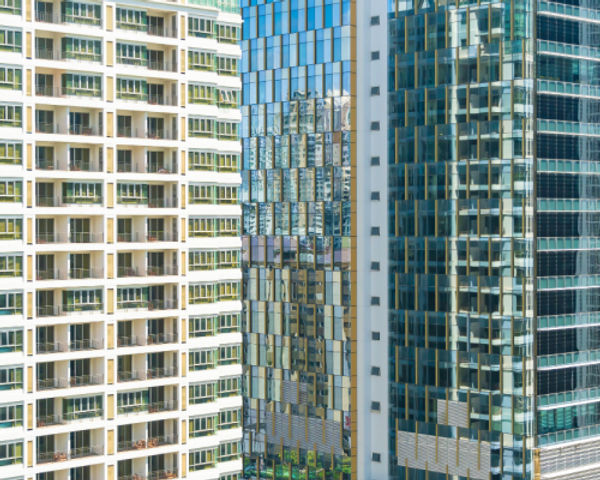
Start-up Zone of Shenzhen Guangming Science City by Tongji Architecture Design. © Zhang Chao
How can highly complex research programs be spatially organized in ways that foster safety, support technological development, and promote exchange? Two recent projects by Tongji Architecture Design demonstrate how architecture can function as an infrastructural platform for emerging scientific fields while developing new typologies between laboratory, campus, and urban building block. Research is not understood as an isolated practice but as a collective, dynamic process that becomes spatially tangible through architecture.
The Multi-Disaster Reduction Engineering Complex at Tongji University brings together research areas focused on the prevention and management of multiple natural hazards within a large-scale building ensemble. Diverse laboratory typologies, simulation spaces, and scientific work environments are integrated into a clearly structured overall organization. The architecture establishes robust spatial frameworks that can be adapted over the long term to evolving functional requirements. A defining visual element is the approximately 100-meter-long, tension-optimized tunnel that serves both as a laboratory and as a load-bearing structure. The architecture mediates between scientific specialization and urban public life. Through communication zones that encourage interdisciplinary encounters and knowledge transfer, the complex itself becomes an instrument of resilience research.
Lorem ipsum dolor sit amet, consetetur sadipscing elitr, sed diam nonumy eirmod tempor invidunt ut labore et dolore magna aliquyam erat, sed diam voluptua. At vero eos et accusam et justo duo dolores et ea rebum. Stet clita kasd gubergren, no sea takimata sanctus est Lorem ipsum dolor sit amet. Lorem ipsum dolor sit amet, consetetur sadipscing elitr, sed diam nonumy eirmod tempor invidunt ut labore et dolore magna aliquyam erat, sed diam voluptua. At vero eos et accusam et justo duo dolores et ea rebum. Stet clita kasd gubergren, no sea takimata sanctus est Lorem ipsum dolor sit amet. Lorem ipsum dolor sit amet, consetetur sadipscing elitr, sed diam nonumy eirmod tempor invidunt ut labore et dolore magna aliquyam erat, sed diam voluptua. At vero eos et accusam et justo duo dolores et ea rebum. Stet clita kasd gubergren, no sea takimata sanctus est Lorem ipsum dolor sit amet. Duis autem vel eum iriure dolor in hendrerit in vulputate velit esse molestie consequat, vel illum dolore euf. (1000 Zeichen inkl. Leerzeichen)
With the Start-Up Zone of Shenzhen Guangming Science City, the focus shifts from hazard prevention toward an innovation-driven knowledge economy. The new building is conceived as an open research center that spatially connects young technology companies, laboratories, and collaborative forms of work. It brings together two facilities: a platform for brain analysis and simulation and a platform for synthetic biology.
Complex experimental installations are housed in a rectangular tower, while a connecting volume functions as a social meeting place. This setting for reading, coffee breaks, and professional exchange creates an atmosphere in which scientific innovation can also emerge beyond the laboratory. The entire ensemble is shaped by organic structures such as the undulating podium roof, which references the agricultural heritage of the region. Through flexible floor plans, shared infrastructures, and publicly accessible areas, the Start-Up Zone positions itself as an active component within a rapidly growing research cluster.
Both projects were honored with the Iconic Awards 2025 for their forward-looking architecture. They illustrate how places can emerge where architecture creates optimal conditions for research and thereby becomes a significant element of contemporary knowledge landscapes.
Manufacturer: Rat für Formgebung
Product: ICONIC AWARDS 2025
Two large-scale buildings in China demonstrate how high density can become a quality: the Shanghai Pinghe School Jinding Campus and the Feicheng Civic Center organise many people within a compact space.
New projects in China focus on microclimates, open structures, and integrated systems, thus taking a contemporary approach to sustainable construction.
0
Recent CommentsMixed-Use Related News You might want to check out
View by

Trampoline Park Sky Zone Takes 35K Sf At Harlem’S East River Plaza
Commercial Observer
07 February 2026
mixed-use

Gencom Buys Nyc Ritz-Carlton In Third Latest Luxury Hotel Acquisition
Commercial Observer
07 February 2026
mixed-use
Affinius Capital Provides $115M Refi For New Nyc Multifamily Property
Commercial Observer
07 February 2026
mixed-use

In Savannah, Georgia, Aamp Studio Pays Homage To A Former Landmarked Bank With The Design Of A New Hotel, Municipal Grand
The Architect’s Newspaper
07 February 2026
mixed-use
Carramerica Lands $99M Refi For Intercontinental Hotel In D.C.’S Wharf District
Commercial Observer
06 February 2026
mixed-use
Cbre Provides $96M Refi For Luxury Residential Complex In Hackensack
Commercial Observer
06 February 2026
mixed-use