miningmining
System-Level Electrification – The New Benchmark For African Mining
By Africa Mining Market•03-10-2026March 10, 2026•5 min
Africa Mining Market•03-10-2026March 10, 2026•5 min mining
The global mining industry, including the African and South African mining industry, is navigating a landscape shaped by economic uncertainty, supply chain disruptions, and evolving regulations. Rising operational costs, geopolitical tensions, and shifting policies are influencing investment decisions. Supply chain bottlenecks and international conflicts are further increasing delays and expenses, while regulatory shifts, including trade policies and high tariffs, add layers of complexity.
However, amid these challenges, technological innovation and sustainability efforts are redefining the sector. The mining leaders are expected to grow production while reducing emissions in a measurable and sustainable way. New technologies like artificial intelligence (AI), digital solutions, and automation are improving efficiency, while decarbonization and the adoption of renewable energy are gaining momentum. Investments in clean technology and infrastructure continue to fuel demand for critical minerals, offering new opportunities despite market volatility.
The South African mining sector continues to play a pivotal role in the national economy, contributing approximately 6% to nominal GDP in 2024 and 0.2% less in 2025, according to data from the Minerals Council South Africa and the Department of Mineral Resources. Despite this contribution, escalating energy costs and supply instability remain material structural constraints, directly impacting operating margins, production reliability, and long-term capital planning.
At Mining Indaba 2026 (MI26), industry dialogue shifted from aspirational targets and timelines to a more fundamental question of execution. During the pre-Indaba Ministerial Symposium, the Minister of Mineral and Petroleum Resources emphasised that mobilising capital at the scale required for exploration, responsible mining, and value addition closer to the point of production cannot be achieved by government or the private sector acting independently. It requires a coordinated partnership.
This principle applies equally to operational transformation. Scaling production while reducing environmental impact is achievable, but only through integrated, system-level solutions. Productivity gains and emissions reductions will not result from isolated technology deployments; they require coordinated optimisation across haulage, processing, and energy systems.
The pathway forward demands decisive, structured implementation. The industry is progressing beyond pilot initiatives toward full-scale electrification strategies, with broader fleet adoption anticipated to become a strategic priority by 2030. Mining companies taking measurable, execution-focused steps today are establishing the technical and operational foundations necessary for sustained, low-carbon competitiveness in the years ahead.
The solution is clear: electrification, automation, and digitalisation must be embedded at the core of mining operations, not treated as parallel projects. Electrification is already transforming mining fleets worldwide and is emerging as one of the most effective levers for reducing emissions and improving efficiency while enhancing productivity. This transition is set to accelerate over the next decade as technology and infrastructure continue to advance across Africa.
Together, these technologies form the foundation of the next generation of mining operations, enabling companies to transform at scale rather than through isolated initiatives. Electrified haulage reduces diesel dependence and exposure to fuel price volatility. When deployed in combination, these capabilities allow mines to decouple growth from emissions, strengthen operational control, and scale responsibly, delivering predictable output, lower carbon intensity, and closer alignment with global investor expectations.
The mining sector is at a critical juncture, needing to transition from traditional, labour-intensive methods to a modern, technology-driven industry to ensure long-term viability. This “leap” involves adopting modernisation, automation, and digitalisation, often encapsulated in initiatives like eMine and all-electric mine, to tackle deep-level mining challenges, improve safety, increase efficiency, and secure global competitiveness.
In support of the all-electric mine, ABB made available solutions such as ABB Ability™ eMine™, which help mining companies move from ambition to measurable results.
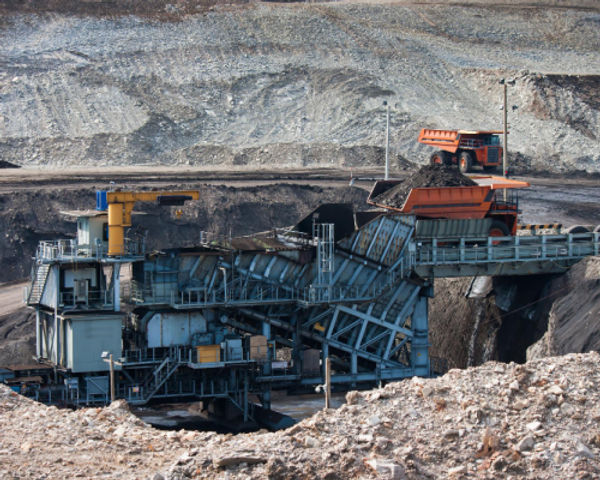
ABB Ability™ eMine is a framework of methods and integrated electrification and digital solutions that covers the entire mining process from pit to port, helping convert existing mining operations from fossil fuels- to all-electric energy. As a point of reference, electrifying every truck in every mine could remove 198,000 tons of CO₂ from the air daily. One solution from the eMine offering is the ABB eMine™ Trolley System. Like a tram or a bus in a city, hauling trucks within the mine run on an electric trolley line, reducing diesel consumption by up to 90% and significantly lowering energy costs and environmental impact. The system is currently helping to reduce carbon emissions by 30% at a mine site in Canada.
The solutions combine electrified haulage, high-power automated charging, integrated grid-to-renewable energy systems, and digital optimisation tools to significantly cut diesel use and emissions while improving mining productivity and energy efficiency. These technologies are designed to work together, ensuring emissions reduction is operational, measurable, and scalable, rather than isolated or theoretical.
Sustainability is no longer a regulatory checkbox; it is a competitive differentiator. Mining companies that integrate renewable-powered adoption operations, advanced carbon monitoring, and low-impact beneficiation are increasingly commanding premium valuations.
The African mining industry faces a clear mandate: reduce emissions while sustaining growth and competitiveness. The era of pledges has passed. The era of accelerated, measurable execution has begun. The industry doesn’t only talk about electric mines. The electric mine and the digital mine must be part of the same conversation.
Electrification, supported by automation, digital optimisation, and renewable energy, is no longer a future ambition, it is already reshaping mining operations worldwide. In Africa, progress will vary by region, based on infrastructure and energy availability, but the direction is clear.
Mines that act decisively adopting integrated solutions and taking a phased, execution-focused approach, will define the future of sustainable mining on the continent.
Want more stuff like this?
Join over 65, 400 subscribers and receive our weekly newsletter!
Please check your inbox or spam folder to confirm your subscription.
Recent Comments
0
Loading related news…