RailwayRailway
Nsw Unveils $2.1B Rail Reliability Plan For Sydney Trains
By Rail Express•06-17-2026June 17, 2026•5 min
Rail Express•06-17-2026June 17, 2026•5 min Railway
The New South Wales Government has announced a record $2.1 billion investment in maintenance and reliability across the Sydney Trains network, forming a central plank of the 2026–27 State Budget to be handed down on 23 June.
The funding package is designed to address long-standing performance issues, strengthen incident response, and improve the passenger experience across one of Australia’s most heavily used rail systems.
Framed as a comprehensive Rail Reliability Plan, the investment targets both infrastructure and operational improvements across the network, which spans 14 lines, 288 stations and more than 1790 kilometres of track, carrying just over one million passengers each weekday.
A key component of the package is an additional $200 million for network maintenance compared with the previous year. This funding will support more intensive and targeted upkeep of track, power supply and signalling infrastructure, with a particular focus on areas identified as high-risk or operationally critical.
The program builds on findings from the Independent Rail Review into the May 2025 overhead wire failure at Homebush, which caused widespread disruption over two days. That review highlighted the need for more strategic maintenance in “critical zones” where faults can trigger cascading impacts across multiple lines.
In response, the government has already committed to a four-year, $425 million asset renewal program, covering track, signals, overhead wiring and drainage improvements – particularly in flood-prone sections of the network. A further $35 million reliability program is accelerating repairs in high-priority locations where failures have the greatest system-wide consequences.
A further $150 million over four years has been allocated to upgrades at the Rail Operations Centre (ROC). These improvements are aimed at strengthening real-time decision-making, enhancing system coordination, and delivering faster, more effective responses to service disruptions.
The investment also reverses earlier setbacks, including the cancellation of a customer information management system prior to the ROC’s opening in 2018. The latest funding seeks to improve communications with passengers during incidents, a key area of criticism in the 2025 review.
Complementing these upgrades is the establishment of a new Passenger Care and Support team, designed to assist customers during major disruptions. The team will be deployed dynamically based on incident severity and will operate across trains, stations and key interchanges. Its role includes providing clear face-to-face information, offering basic welfare support such as water during delays, assisting vulnerable passengers, and helping travellers continue their journeys via alternative transport options.
The Rail Reliability Plan also places emphasis on staffing, with commitments to increase the number of train drivers and guards on intercity services. This measure is intended to improve timetable resilience and reduce delays across corridors linking Sydney with the Illawarra, Central Coast, Newcastle and the Blue Mountains.
Officials have stressed that reliability depends not only on infrastructure investment but also on a well-resourced and coordinated workforce, supported by improved planning and operational integration. The funding is expected to strengthen workforce planning and enable more consistent service delivery across the network.
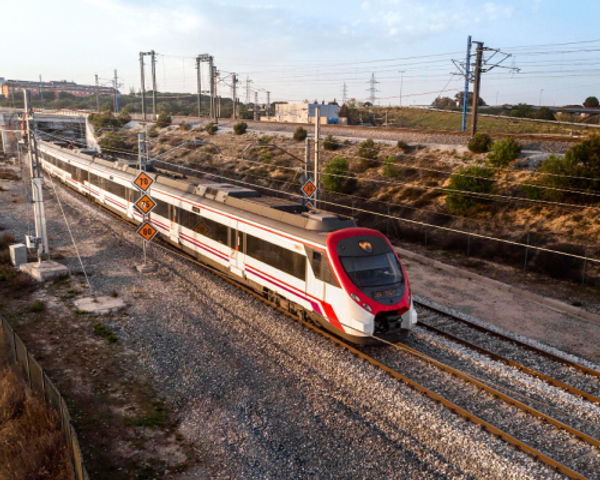
Fleet modernisation remains another important pillar of the reliability strategy. The government has introduced Mariyung intercity trains, the first new trains deployed on the network in almost two decades. These units are now in service across key regional routes, including the Central Coast and Newcastle Line, the Blue Mountains Line, and the South Coast Line.
The introduction of the new trains has enabled older rolling stock to be retired, while others are being refurbished for continued use on suburban services. This approach aims to improve reliability while maintaining fleet availability during the transition.
The government has positioned the Rail Reliability Plan as a holistic response to systemic issues affecting Sydney’s heavy rail network. Alongside ongoing investment in major projects such as the Sydney Metro, the plan underscores a renewed focus on maintaining and optimising existing infrastructure.
According to transport officials, the funding supports a more integrated operational model, linking infrastructure maintenance, workforce planning and real-time service management. The aim is to reduce risk, improve recovery times during disruptions, and deliver more consistent service outcomes for passengers.
Passengers are expected to see gradual improvements as the program is rolled out, with benefits including more reliable services, improved incident management, and better communication during disruptions. Over time, the government anticipates a network that is more resilient, better coordinated, and capable of meeting the demands of a growing population.
The $2.1 billion package represents one of the largest single-year investments in the Sydney Trains network, signalling a shift toward long-term reliability as a core priority for the state’s transport system.
“The 12 recommendations of the Independent Rail Review remain the blueprint for how we prioritise maintenance but also deploy new technology and raise standards around customer care during disruption or communicate to passengers on stations,” said Transport Minister John Graham.
Chief Executive of Sydney Trains Matt Longland said the investment strengthens reliability end-to-end—from upgrading critical infrastructure through to improving incident response, crewing and passenger support.
“Enhancements at the Rail Operations Centre will deliver better decision-making across the network and improve incident response capability,” he said.
“Importantly, the Passenger Care & Support team will ensure we are looking after our customers during disruptions, providing clear information and practical support when it matters most.”
Recent Comments
0
Loading related news…