railway
Unife: Europe’S Transport Challenges Demand Rail First
By Railway Pro•February 04, 2026•10 min read
Railway Pro•February 04, 2026•10 min read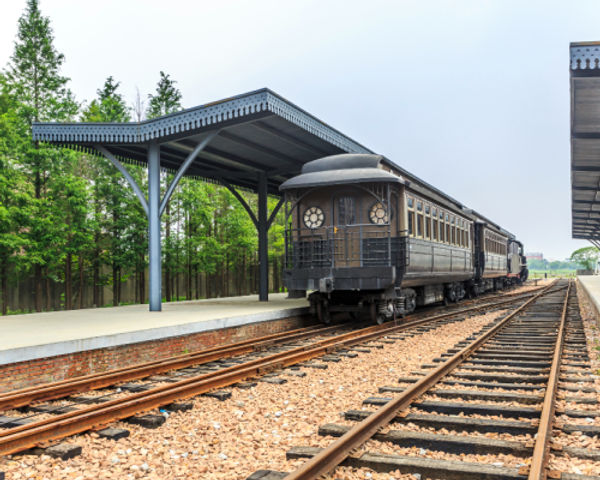
Europe faces many challenges in the transport sector, but a ‘rail first approach’ offers a clear path to cleaner, more efficient and better-connected mobility, while strengthening the resilience and competitiveness of the transport system. Adopting ‘rail first’ means developing a fully integrated rail network, equipped with advanced technologies that enable seamless traffic, support military mobility and rely on trains fitted with the latest systems.
The deployment of ERTMS and FRMCS as core digital components will unlock rail’s potential, while the continued digitalisation of the railway system and rolling stock will deliver higher capacity, improved performance and safer cross-border services.
At the same time, the European rail supply industry faces unfair competition from third-country rivals, driving calls for stronger EU public procurement rules and restrictions on high-risk foreign suppliers, while maintaining a commitment to open and fair markets.
Without a successor to Europe’s Rail Joint Undertaking, Europe also risks losing its global lead in rail innovation, with wider consequences for the rail sector and European manufacturing. Continued investment is therefore essential to build on existing breakthroughs.
In all this ecosystem, investment and financing is vital to keep rail networks modern, technologies up to date, and innovation moving forward across the sector.
Enno Wiebe, Director General of UNIFE, outlines how to tackle challenges and emphasises the critical role of investment, innovation, and other key messages.
Negotiations are currently under way on CEF III, with the European Commission proposing a transport budget of EUR 51.5 billion, including EUR 17.5 billion earmarked for military mobility. How do you assess the proposed level of investment in the context of the next Multiannual Financial Framework (2028–2034)?
Enno Wiebe: While we are pleased to see there is an increased figure and a priority on key cross-border projects, it is important for everyone to understand the EU Budget process.
Negotiations on the next Multiannual Financial Framework are ongoing in the EU Council but nothing is agreed until everything is agreed, and the definition of own resources could impact the size of the budget and the respective programmes’ envelopes.
This means our increased figure for the Connecting Europe Facility III is not guaranteed as negotiations continue, and we are working hard to ensure that it is, and potentially even increased further.
Our argument is a simple one – Europe has many challenges to meet on climate, transport (TEN-T, ERTMS rollout) and now military mobility – the only way to achieve them is by prioritising rail first.
Our mode of transport is clean, moves people safely and efficiently, while also being essential to the security our continent. If we agree this is a priority, and the rail supply industry has predictability on long-term financing, we can help to achieve these goals.
With UNIFE backing the Military Mobility Package, how can increased EU allocations transform the European rail network in time for the 2030 TEN-T deadlines?
Enno Wiebe: As previously mentioned, investment is key. We need to prevent further delays to TEN-T projects, and every euro counts in this regard.
I should say that the Military Mobility Package is an important opportunity to ensure network harmonisation at an EU level as well as network improvements, in terms of removing bottlenecks, and network upgrades, in terms of implementing technology.
Defence personnel need to move across our network safely and seamlessly. This issue is of the highest priority to European leaders, and it would be quite surprising if streamlined vehicle authorisation and harmonised rules couldn’t be accommodated to meet this need.
We need to keep working with the institutions on what investment may be needed on signalling, but it’s important also to talk about how we can end fragmentation and create a more interoperable network. We are undertaking work in this space, and we are pleased to say that the European Union Agency for Railways (ERA) recognises these challenges.
How is digitalisation reshaping the European rail sector, and which digital technologies are likely to be the most transformative over the next decade?
Enno Wiebe: One of the keys to unlocking the benefits of digitalisation is ensuring there is more information and data to work with. Manufacturers, railway undertakings and infrastructure managers need to better understand in real time what is taking place, and manufacturers from our perspective can build a better performing and high quality product as a result of understanding performance.
Digital twins and AI have significant potential with their predictive maintenance capabilities, while there is also potential benefits to optimising energy use and to better future proofing rail infrastructure against climate risks.
We also see the development of the Future Railway Mobile Communication System (FRMCS) and the Digital Automatic Coupling (DAC) technology as part of the Europe’s Rail Joint Undertaking. Ensuring we follow through and deliver on these technologies is vital, and that includes ensuring there is enough pre-deployment funding for this technology.
We must be careful, however, about the risks of transversal digital regulations which do not fit the specific situation of rail. Our members operate business to business and have long life-cycles. This is why we have been actively promoting a more balanced framework, in particular when it comes to the Cyber Resilience Act and Data Act.
Which digital solutions are delivering the fastest returns for Europe’s rail networks today?
Enno Wiebe: Digitalisation in rail cannot happen in a vacuum. The sector must modernise while keeping the system running safely, reliably, and every day. That reality makes migration – not technology – the biggest challenge.
Rather than a single leap, the journey from today’s systems to the digital target state requires a carefully staged transition. Railways therefore need a clear migration roadmap, combining smaller, incremental measures with large-scale programmes such as the full rollout of ERTMS or the introduction of Digital Automatic Coupling. Each step matters. Every migration contributes a piece to the overall transformation, even if its impact is not immediately visible.
In the near term, digitalisation often starts with pragmatic solutions that deliver fast value, such as predictive maintenance, condition monitoring, and data-driven asset management. These measures improve reliability and efficiency while preparing the ground for more profound system changes.
At the same time, attention must turn to next-generation core technologies. The forthcoming radio-based communication system, FRMCS, is a critical enabler of future digital rail operations. Once its specifications are validated, rapid implementation will be essential – particularly because the current GSM-R system is approaching the end of its operational life.
The message is clear: digital rail transformation continues. By planning migrations early, sequencing them intelligently, and acting with urgency where legacy systems are ageing, rail networks can modernise without disruption—and build a resilient, interoperable digital future.
Is digitalisation progressing fast enough to meet Europe’s rail capacity and decarbonisation goals?
Enno Wiebe: We must understand the digitalisation of the railway sector as a migration project in a complex system. Digitalisation and technology are only one component. We are seeing leaps taking place across the rail supply industry and sector all the time when it comes to the tech. If Europe’s Rail Joint Undertaking has successors, I am confident the leaps we can take can be substantial.
But when it comes to decarbonisation, we don’t necessarily need to have emissions as a priority issue, because rail is only 0.4% of the EU’s transport greenhouse gas emissions. It’s clear that if we have that footprint, we need to focus on getting more people on to trains, trams and metros across the continent from whatever else they are using – whether it be planes or cars.
That means investment, it means harmonisation, it means prioritising the ERTMS rollout, it means getting serious about organising the infrastructure around the rail supply industry, so we can keep delivery times on track.
This is at the heart of our work. If we’re successful, Europe is successful. That’s what we want people to understand.
Why is it important for the European Commission to establish a successor to the EU-Rail Joint Undertaking, and what risks does the rail sector face if such a partnership is not continued?
Enno Wiebe: Without a successor of Europe’s Rail Joint Undertaking, there is a clear risk we stop being the global pacesetters for innovation in rail. This would have significant flow on effects, not just for the industry, but European rail and broader European manufacturing.
It can be very easy to assume a ‘generational’ tech advantage can be maintained. We have seen it in the silicon chip manufacturing industry first hand, in how quickly what people assume is a 20-year advantage can be whittled down to 5 years in a short amount of time, thanks to the competition prioritising innovation.
Further to this, there is a European defence component to all this. We need to ensure that as secure as our networks are, we need to build further resilience, as malicious actors improve their capabilities every year.
Staying ahead from a technological perspective is vital. Europe’s Rail Joint Undertaking has been successful and delivered some breakthroughs. We need to see it through and ensure the technology that has already been developed (ERTMS, FRMCS, DAC) also has investment for pre-deployment.
This can only be done at EU level to ensure we deliver harmonised, interoperable and affordable EU-wide innovation. Going back to national programmes risks further fragmentation and the path to the Single European Railway Area.
With growing participation from third-country companies in the European railway tenders, maintaining fair competition has become a significant concern. How do you see this issue being addressed?
Enno Wiebe: We are just not competing from the same baseline as some of these companies from third countries. European rail suppliers cannot do business in certain jurisdictions without strict conditions placed upon it, yet those third country industries have easy access to our market.
This is before you get to the comparisons on labour and environmental laws in those countries, let alone the strong state support some third countries receive. There is no fair competition, and it is why we have been very vocal about changes to the EU’s Public Procurement Directives.
On top of this, it is just a common sense position that considering changes in the world, high-risk foreign suppliers should be banned from European rail networks, which are expected to transport military personnel and goods.
We raise this issue because it’s a very serious matter. Fair open markets are always our preference in a perfect world, and unfortunately the world has been less than perfect in the last few years. It’s still our preference, but global events are really challenging this.
What do you consider to be the biggest challenges currently facing the rail transport sector, and how is the European rail supply industry responding to them?
Enno Wiebe: We have recognised the need to fundamentally modernise the railway system and prepare it for the future. The greatest challenge lies in managing a seamless migration while operations continue, and in coordinating all stakeholders – this is where the real effort is required. Everyone has their own challenges right now and is doing their best to solve them. My key remark is that we need to across the sector realise and see how our challenges are interlinked, and work to solve them together.
Challenges in the freight sector can be linked to slow technological adaption through a lack of support, and a lack of harmonisation of EU rules. It’s the same in the passenger rail sector. ERTMS rollout and the harmonisation of standards affect all of us, and on top of this, both the passenger and freight sector face unfair competition from other modes of transport.
This is why I have worked hard in my first year and a half at UNIFE to build these bridges, which isn’t easy sometimes as we have different positions on different issues. Uniting the sector is a key challenge to solve, but once we do this, there’s nothing we cannot achieve together.
0
Recent CommentsRailway Related News You might want to check out
View by

New York Tourist Railroad Eyes New Home
Railfan and Railroad
04 February 2026
railway
Pacific Northwest Short Line Looks To Restart Tourist Train
Railfan and Railroad
04 February 2026
railway

Adelaide Metro Celebrates Drop In Incidents After New Safety Measures
Rail Express
04 February 2026
railway
Metro Tunnel Makes The Big Switch
Rail Express
04 February 2026
railway

Shri Hari Shankar Verma Assumes Charge As Member (Operations & Business Development), Railway Board
Rail Analysis
04 February 2026
railway
Webuild Secures Rome Metro C Section T1 Contract Reinforcing Leadership In Sustainable Metro Construction
GRR
04 February 2026
railway
South Eastern Railway Records Highest-Ever Passenger Trust Scores
GRR
04 February 2026
railway
European Railway Award 2026 Gala
Railway Pro
04 February 2026
railway
Unife: Europe’S Transport Challenges Demand Rail First
Railway Pro
04 February 2026
railway

Cpkc Sets New Grain-Haul Record For January
Progressive Rail Roading
04 February 2026
railway
Phoenix Pulls Plug On Capitol Light-Rail Extension
Progressive Rail Roading
04 February 2026
railway
Rail Supplier News From Knoxville Locomotive And Bohr Electronics
Progressive Rail Roading
04 February 2026
railway