water
Jan 24, 2026 New Civil Engineer- Water
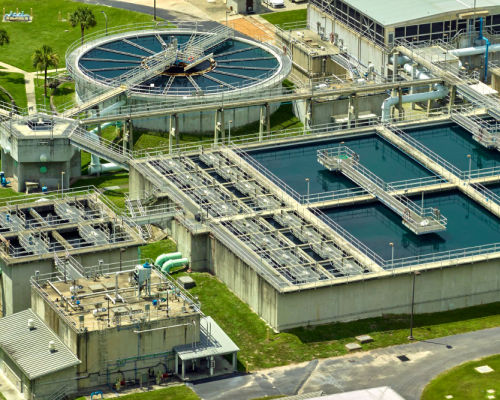
What Can Industry Do To Deliver New Town Water Infrastructure On Top Of Amp8 Workloads?
The UK Government has set a major ambition for house-building, including a relaunched new town policy for the UK. However, new towns and other large developments have extensive utility needs at a time when AMP8 is ramping up activity and stretching delivery capacity already.
The water industry is currently undergoing a major expansion in capital works, with over £100bn set to be invested in new, upgraded and maintained infrastructure in the five years to 2030.
This represents a significant challenge for an industry that now finds itself planning, designing and building new reservoirs for the first time in a generation, at the same time as undertaking new pipeline projects and addressing historic under- investment in renewing legacy assets that date back to the 1800s.
Against that backdrop, new models of delivery, training programmes, innovative practices and digital technologies are being deployed to help ease the strain on supply chains and delivery partners, who simply do not have the number of people needed to deliver at this scale.
This presents a particular issue in the water sector, where not only is AMP8 a generational scale-up in capital works, but those works will continue into AMP9 (from 2030-2035).
So where does this leave major projects like new towns that will need additional infrastructure delivered that is not planned for in AMP8 programmes?
GHD UK water market leader John Hensman explains: “Major developments such as new towns, industrial clusters and hyperscale data centres face the critical challenge of securing water infrastructure in regions where utilities are already committed to extensive AMP8 programmes. Indeed, these developments must therefore compete for capacity, resources and attention in an environment of heightened regulatory and sustainability expectations.”
Mace business unit director for resilience Rachel O’Donnell agrees and points out that for new towns this is not specific to water. “One thing that we can see now is we’re starting a wave of investment in utility upgrades that’s not going to disappear. Our need for water, our need for energy and our need for good connectivity through broadband is only going to increase. It’s not going to decrease any time soon.”
Indeed, this is potentially a bigger question for new town policy than many people realise, not least because water is just one of the major areas of infrastructure investment that they will need to facilitate their success.
Aecom masterpanning lead for UK and Ireland Patrick Clarke says: “The cost of providing that infrastructure is central to making the developments viable. We published a cost model in the summer, which looked at a new community of 4,000 homes on a greenfield site outside the southeast of England.
“That was below the 10,000 home [new town] threshold but that model found that the average cost of the infrastructure was £67,000 per home, which is obviously significant.”
Clarke points out that while such costs don’t necessarily rise in a linear relationship to the number of homes, and that different types of development face different costs, “it would be reasonable to say that the infrastructure cost for a master developer for a new town of 10,000 homes could be in the region of between £500M and £1bn”.
Such figures would of course reflect more than one infrastructure sector, but in the water sector, the price tag comes with another challenge – the complexity of stakeholders and regulatory systems involved.
Early engagement
The number of organisations in water delivery is often extensive. It’s a systemic characteristic of the sector that has become even more challenging in recent years, with growing public and political frustration about pollution being added to concerns about water shortages and the quality of water coming through our taps.
“Heightened environmental standards, biodiversity net gain requirements and community expectations demand transparent, inclusive engagement from the outset,” stresses Hensman, adding that “stakeholder involvement often occurs after critical design decisions, leading to misaligned expectations, costly redesigns and regulatory delays”.
With new towns, the extent of different delivery partners and the scale of the projects themselves will require extensive co-ordination when addressing the public.
“We have deployed AI-driven tools to process thousands of stakeholder comments for major transport and water projects, ensuring transparency and responsiveness at scale. And common data environments are centralising information for utilities, contractors, and communities, reducing friction and enabling real-time collaboration,” explains Hensman.
One way in which public opinion manifests is through elected officials, local councils and the government. In the UK, where the government is strongly committed to new towns, a misalignment with local decision-makers can hinder delivery capacity being optimised.
This can be got right however, with the right approach. As O’Donnell emphasises, that often comes down to understanding the challenges and motivations of those being communicated with.
“You’ve got to map your stakeholders out early, you’ve got to understand who they all are, you’ve got to understand what their agendas are. For a lot of local authorities, their agendas are around getting Section 106 localised benefits coming in. That is fine, but that can sometimes mean that barriers are put up against a wider project with wider benefits.
“So it’s about having that full map, full understanding of what they are looking for and what things are their push points – and then working with them. So, it’s important to have a team who are really good at understanding people and the real needs and drivers of why this particular thing is necessary. And you need to be clear why it is necessary in a specific place and listen to stakeholders and adapt around the particular points that people have.”
Of course, great stakeholder management does not in itself provide the pathway to the capacity needed to deliver. And for that, there is no substitute for early planning in terms of what will be needed, where and when, along with assessing what is already in place.
The water industry is currently undergoing a major expansion in capital works, with over £100bn set to be invested in new, upgraded and maintained infrastructure in the five years to 2030
Early planning
Aecom calls this Planning IE, the I of which stands for “integrated” and the E stands for “evidence-led”.
“We front load the process with technical evidence from across a multidisciplinary team right from the beginning,” explains Clarke. “So we seek to build up a comprehensive understanding of a site and the
surrounding context from the beginning.”
For a new community like a new town, this spans transport movement networks, ecology, cultural built heritage, drainage, flood risk, utilities, local socioeconomics, schools, hospitals, and importantly, existing levels of capacity in and around the site.
“This is really all a process of firstly de-risking projects and trying to avoid unforeseen issues arising, but also more importantly, trying to understand what an exemplar approach looks like in relation to each discipline,” says Clarke.
“And critically, how do we get the sort of synergies and connections between different technical disciplines to the teams working in a really integrated way right from the beginning.”
With regard to water, this may lead to very different outcomes for different sites, depending on the spatial plan and the extent of capacity available.
“What are the needs, and what’s the capacity that exists in the area at the moment,” asks O’Donnell, to illustrate the early planning required. “And what’s the investment that’s going into increasing that capacity and does that then meet the needs of what’s being proposed or not?”
That matters because while AMP8 projects will dramatically improve water capacity and security in some places, that does not mean all sites – especially sites not previously identified for large developments like new towns – will benefit. As a result, other options need to be considered for securing that water.
“If I look at Sizewell C, they’re having to build a desalination plant [to meet construction demand for water],” explains O’Donnell. “Now, for a new town’s development, you could potentially foresee in the future if there isn’t capacity, then maybe you would need to start looking at more desalination options – particularly if the climate’s getting more strained and the UK is getting drier.”
These are decisions that need to be made early because, as with all infrastructure, it not only facilitates a new project like a new town but ensures that existing communities are not adversely affected by reduced capacity as a result of those projects.
O’Donnell warns that while works to bring in utility connections are vital and the lack of them could be detrimental, the public might not notice. “There is an opportunity to bring in the capacity early not just to meet the need, but also enhance capacity for existing communities. But with utilities, no one is going to say ‘great, they got the grid connections and water connections ready to go’ in the way they might if you start to put the transport, health and education capacity in early.”
Legacy
While the above may help secure much needed water capacity and delivery capacity here and now, there is also an opportunity to change things with a nationwide programme as vast as the new town programme.
“For major developments, stakeholder alignment is not a ‘soft’ issue, but a hard enabler of delivery capacity,” explains Hensman. “Without it, planning approvals stall, infrastructure sequencing breaks down, and social licence risks escalate, especially under heightened environmental scrutiny.”
However, he adds that there is an opportunity for water professionals involved in new town projects to harness technology at scale to change outcomes. “Early, structured and tech-enabled engagement can unlock efficiencies, mitigate risks and accelerate delivery.”
O’Donnell points out that the scale also represents an opportunity to engage more people in an industry that they might not have otherwise considered. “All the energy works required, all the water delivery required, those are really key skills that can be transferred out of the [new town] house-building sector into the infrastructure utility sector, which will then position people for careers in future AMP cycles.”
And ultimately, those professionals will not be delivering just water. “It’s a transformational, intergenerational opportunity to address our housing crisis, but also to support economic growth and create a long-term legacy for the future,” says Clarke. “These should be fantastic places that continue to deliver benefits for people economically, socially and environmentally for generations to come.”
Like what you've read? To receive New Civil Engineer's daily and weekly newsletters click here.
0
Recent CommentsWater Related News You might want to check out
View by

Average Household Water Bills Set To Rise 5.4% A Year From April To £639
Water Briefing
30 January 2026
water
Environment Agency Progresses Research Into Managing Pfas In The Water Environment
Water Briefing
30 January 2026
water

Ni Water Updates Belfast City Council On Impacts Of Long-Term Underinvestment On Wastewater Capacity And Economic Growth
Water Briefing
30 January 2026
water
Flocean Wins World Economic Forum Water Resilience Challenge
Filtration + Separation
29 January 2026
water
Zhengzhou’S Sewage Shift To Green And Low-Carbon Development
The Source Mag
28 January 2026
water
Charting The Next Wave Of Transformation In Istanbul
The Source Mag
28 January 2026
water
Arup-Binnies Jv Appointed To Plan Abingdon Reservoir To Hampshire Water Transfer Pipe
New Civil Engineer- Water
28 January 2026
water

Great Lakes Filters Expands Converting Capabilities With New Duplex Slitter
Filtration + Separation
27 January 2026
water
What Can Industry Do To Deliver New Town Water Infrastructure On Top Of Amp8 Workloads?
New Civil Engineer- Water
24 January 2026
water
Work Begins On £48M Knutsford Sewer Upgrade Featuring 1.8Km Stormwater Tunnel
New Civil Engineer- Water
24 January 2026
water
Southern Minnesota Water Systems Set For Upgrades Under $11.4 Million Federal Funding
Underground Infrasturcture
23 January 2026
water
Thames Water Discusses ‘Extensive’ Procurement Of £5.7Bn Abingdon Reservoir Contractor Deal
New Civil Engineer- Water
23 January 2026
water