railway
Delhi Metro’S Magenta Line To Emerge As Longest Route, Boosting Connectivity Across Ncr
By Rail Analysis•February 12, 2026•3 min read
Rail Analysis•February 12, 2026•3 min read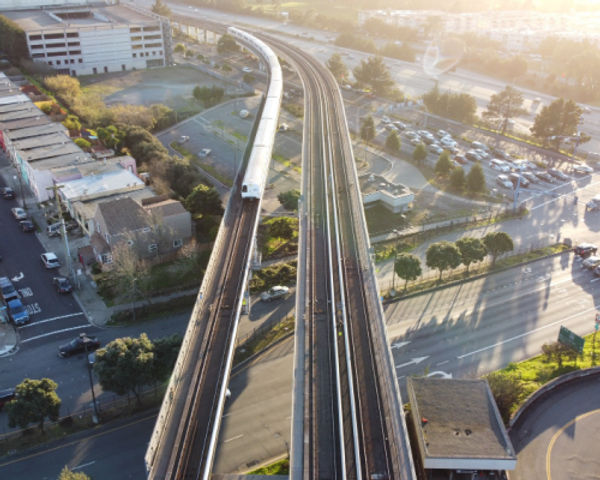
Delhi Metro’s Magenta Line is set to become the network’s longest corridor, stretching 89 kilometres from Botanical Garden to Inderlok. With 21 interchange stations and 40 underground stops, it will offer unmatched connectivity. The fully driverless line will significantly reduce congestion, and set new engineering benchmarks across the National Capital Region.
Introduction:
The Magenta Line (Line-8) of the Delhi Metro is all set to emerge as the longest corridor in the entire network, marking a significant milestone in the capital’s urban transport system. With recent approvals under Phase–V (A), the corridor will extend from Ramakrishna Ashram Marg to Indraprastha via Central Vista, while the Indraprastha–Inderlok stretch under Phase–IV will also be integrated into the Magenta Line.
Once fully completed, the corridor will stretch approximately 89 kilometres from Botanical Garden to Inderlok, making it the longest line in the Delhi Metro network. The entire route will operate as a fully driverless metro corridor, reflecting the system’s technological advancement.
A Corridor with Maximum Interchanges:
One of the defining features of the expanded Magenta Line will be its 21 interchange stations — the highest in the network. Currently, the operational stretch includes four interchange stations:
With Phase-IV and Phase-V (A) expansions, 17 additional interchange stations will be added, including:
Among these, Central Secretariat, Azadpur, New Delhi, and Inderlok will serve as triple interchange stations, further enhancing route flexibility and passenger convenience.
Extensive Underground Network:
The Magenta Line will not only be the longest but also feature the highest number of underground stations. Out of the total 65 stations planned between Botanical Garden and Inderlok, 40 stations will be underground.
This extensive underground network is expected to:
The corridor’s strategic alignment through key urban and administrative hubs will significantly strengthen cross-city connectivity across the National Capital Region (NCR).
Engineering Excellence on Display:
The Magenta Line also stands out for its remarkable engineering achievements. It hosts two record-setting stations within the Delhi Metro network:
These landmarks reflect the technical sophistication and complex construction efforts that define the corridor.
Transforming Urban Mobility:
With its driverless operations, record length, and unmatched interchange capacity, the Magenta Line is expected to dramatically improve commuting efficiency. The extensive interchange network will reduce travel time, decongest major corridors, and provide smooth transfers across multiple metro lines.
As Delhi continues to expand, the Magenta Line will serve as a backbone for integrated urban mobility, linking residential, commercial, airport, and administrative zones more effectively than ever before.
Conclusion:
The Magenta Line’s expansion marks a transformative chapter in Delhi Metro’s growth story. At 89 kilometres with 21 interchanges and 40 underground stations, it promises faster travel, reduced congestion, and seamless connectivity. Combining scale, technology, and engineering excellence, the corridor will redefine urban transport across the National Capital Region.
Source: DMRC – Press Release | Image Credit (representational): DMRC
Timely insights, straight to your WhatsApp—stay updated with ease!
Stay connected to the rail industry—timely news, straight to Telegram!
0
Recent CommentsRailway Related News You might want to check out
View by

Queenslanders Asked To Help Choose New Station Artwork
Rail Express
11 February 2026
railway

Usd 8 Billion In The Abu Dhabi–Dubai High-Speed Line
Railway Pro
11 February 2026
railway

Csx, Wabtec Sign $670M Locomotive Pact
Progressive Rail Roading
11 February 2026
railway
Judge Pauses Order To Restore Hudson Tunnel Funding
Progressive Rail Roading
11 February 2026
railway

Madrid-Seville High-Speed Line To Reopen On 14 February
Tren Vista
11 February 2026
railway

Sheffield Station Team Win High Sheriff Award After Saving Two Customers’ Lives
Rail Business Daily
11 February 2026
railway