railway
Usd 8 Billion In The Abu Dhabi–Dubai High-Speed Line
By Railway Pro•February 11, 2026•2 min read
Railway Pro•February 11, 2026•2 min read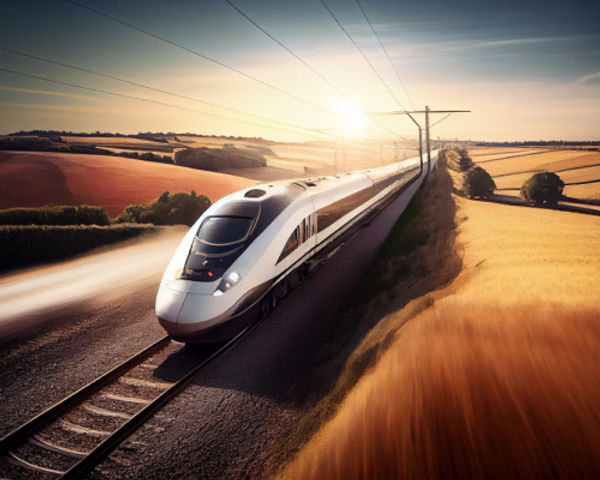
Etihad Rail has awarded design and construction contracts worth over 8 billion USD for the first high-speed rail line in the United Arab Emirates, which will connect Abu Dhabi and Dubai. The project marks a major step in the development of high-capacity rail transport in the region and is scheduled to become operational in 2030.
According to information published by Middle East Economic Digest (MEED), the infrastructure and station works for the first phase of the project have been divided into two large packages, corresponding to the Abu Dhabi and Dubai sections.
The construction of the Abu Dhabi section has been awarded to a consortium led by the local company National Projects Construction (NPC), which includes Trojan Tunnelling, the Turkish group Kalyon, and the Chinese company China State Construction Engineering Corporation. The design of this part will be carried out by the American company Jacobs.
For the Dubai section, Etihad Rail has selected a consortium consisting of Larsen & Toubro (India), China Harbour Engineering Company, and local company Wade Adams. The design will be provided by Egis (France) and Surbana Jurong (Singapore).
General engineering consultancy for the entire project is provided by Spanish companies Sener and Ineco.
The first phase of the project involves the construction of a high-speed line with a total length of approximately 150 km, between the Al-Zahiyah area in Abu Dhabi and Al-Jaddaf in Dubai. The route is divided into four sections:
The line will serve five stations:
The package of works also includes elements for the railway systems, rolling stock, and two maintenance depots.
The line will be designed for a maximum speed of 350 km/h, with an operating speed of 320 km/h. The journey time between Yas Island and Al-Jaddaf stations will be approximately 30 minutes, significantly reducing the current travel time between the two major economic centers of the Emirates.
The Abu Dhabi-Dubai connection is only the first phase of a larger program to develop the high-speed rail network in the United Arab Emirates. The Etihad Rail plan includes:
Phase two: internal urban network in Abu Dhabi with 10 stations
Phase three: rail link between Abu Dhabi and Al-Ain
Phase four: inter-Emirates connection between Dubai and Sharjah
Through this project, Etihad Rail aims to create a fast and competitive alternative to road and air transport, strengthening economic integration and sustainable mobility nationwide.
0
Recent CommentsRailway Related News You might want to check out
View by

Delhi Metro’S Magenta Line To Emerge As Longest Route, Boosting Connectivity Across Ncr
Rail Analysis
12 February 2026
railway
Kanpur Metro Achieves Breakthrough As Tbm ‘Gomati’ Completes Corridor-2 Down-Line
Rail Analysis
12 February 2026
railway
Unife And Cer Sign Joint Declaration Of The European Rail Sector
Railway Pro
12 February 2026
railway


Fta Completes Environmental Review Of Buffalo Light-Rail Extension
Progressive Rail Roading
12 February 2026
railway

Alstom And Terna Team Win €992M Romania Rail Contract
Global Construction Review - Railway
12 February 2026
railway

Network Rail Celebrates Apprentices Powering The Future Of Railway
Rail Business Daily
12 February 2026
railway