RailwayRailway
Study | The European Rail System Has The Technology, But Lacks Funding And Coordination
By Railway Pro•07-09-2026July 09, 2026•5 min
Railway Pro•07-09-2026July 09, 2026•5 min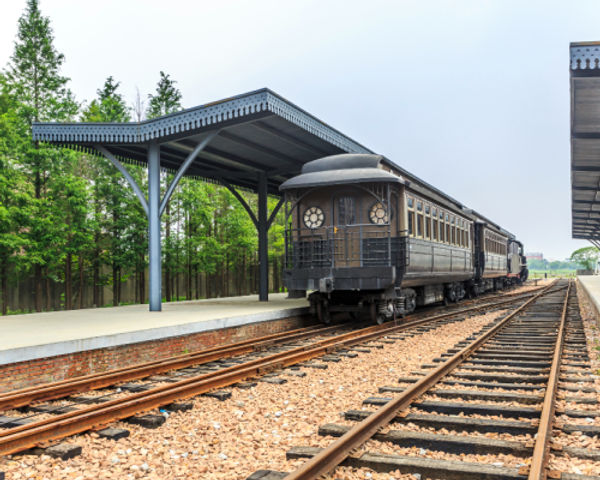 Railway
European railways need digitalisation, ERTMS, automation, and high-speed trains, but the main problem is not a lack of technology. A study conducted for the European Parliament shows that the future of sustainable rail transport in Europe depends above all on coherent governance, stable funding, and genuine integration among member states.
The future of the European rail network through 2050 will be determined less by the emergence of spectacular technologies and more by the ability of the European Union and its member states to coordinate investments, regulations, and cross-border projects.
This is one of the key conclusions of the study “The Future of Sustainable Rail Transport in Europe”, conducted for the European Parliament’s Science and Technology Options Assessment (STOA) Panel and published by the European Parliamentary Research Service (EPRS), the European Parliament’s research service.
The document analyzes possible trajectories for the European rail system through 2050, in a context where the EU aims to shift more traffic from roads and aviation to rail, but faces aging infrastructure, slow implementation of common standards, and significant differences among member states.
The study does not claim that technology is unimportant. On the contrary, ERTMS, digital capacity management, automation, data-driven maintenance, artificial intelligence, and digital automatic coupling are presented as important tools for increasing capacity, reliability, and safety.
But the underlying message is that technology alone cannot compensate for the fragmentation of the European rail system.
The study begins with the observation that, over the past decades, the EU has gradually built the framework for the Single European Railway Area through successive legislative packages, liberalization, interoperability, common safety standards, and the development of the TEN-T network.
However, the gap between political ambition and operational reality remains wide.
The report identifies persistent structural problems: fragmented governance, incomplete cross-border integration, uneven implementation among member states, numerous national rules, and slow progress on interoperability.
For passengers, these issues are particularly evident in international travel. Even though rail passenger traffic has rebounded strongly after the shock of the pandemic, the modal share of rail remains limited by the total cost of travel, reliability, and the ease of using the services, especially across borders.
In freight transport, the situation is even more challenging. Rail continues to lose market share due to relatively short average distances, limited flexibility, and operational fragmentation, although there is potential for growth in intermodal transport and low-emission logistics.
On the infrastructure front, the study describes an extensive but aging system. The high-speed network has expanded significantly, but capacity bottlenecks, maintenance backlogs, and temporary restrictions are increasingly affecting performance, especially on cross-border corridors.
Electrification has progressed unevenly across member states, which accentuates geographical disparities. At the same time, aging assets and staff shortages raise questions about long-term reliability.
The report also highlights climate-related risks. Heat waves, floods, and extreme weather events are becoming a structural problem for rail infrastructure, increasing the lifetime costs of assets and requiring systematic adaptation of networks and operations.
In other words, the future of rail is not just about new trains and digital signaling, but also about the ability to maintain, repair, and adapt existing infrastructure.
The study treats rail technologies as enablers, not as miracle solutions.
The implementation of the European Rail Traffic Management System (ERTMS) is essential for interoperability and increased capacity. Similarly, digital traffic management tools, automation, and predictive maintenance can improve efficiency and reliability.
For freight, Digital Automatic Coupling (DAC) is presented as an important technology for competitiveness, as it can reduce manual operations and enable more efficient freight trains.
At the same time, more radical technologies, such as maglev and hyperloop, are analyzed as long-term or niche options. However, the study highlights significant uncertainties regarding costs, interoperability, capacity, regulation, and the impact on the existing rail system.
The warning is clear: investments in new technologies must not divert attention and funds away from the maintenance, interoperability, and optimization of the current network.
The study outlines four scenarios for the future of European rail through 2050. The common conclusion of the scenarios is that governance and coordination of investments matter more than the level of technological ambition.
The report proposes five policy options for the development of the European rail system.
Of all the issues, funding stands out as one of the most critical.
Rail infrastructure is extremely costly, and infrastructure access charges cover only a limited portion of the costs. Consequently, the system requires substantial and stable public support.
European instruments, such as the Connecting Europe Facility (CEF), funding through the Recovery and Resilience Facility (RRF), and loans from the European Investment Bank (EIB), play an important role, but the total level of investment remains below identified needs, especially for maintenance, resilience, and cross-border projects.
The report warns that the lack of stable long-term funding, delays, and cost overruns could decisively affect the future performance of the European rail system.
Looking ahead to 2050, the study shows that external pressures—climate goals, energy security, demographic changes, digitalization, and the geopolitical context—will increase the strategic importance of rail.
But for rail to truly become the backbone of sustainable mobility in Europe, it is not enough to build new lines or introduce new technologies.
A shift is needed in how rail networks are planned, financed, and operated. The report advocates for stronger European coordination, joint project evaluations, greater fiscal capacity at the EU level, and regulatory frameworks that reward compliance with common standards.
In short, Europe already has many of the technical solutions needed for a better railway system. The question is whether it can also build the political, financial, and institutional mechanisms to turn them into a functional system on a continental scale.
Recent Comments
0
Related NewsRailway Related News You Might Want To Check Out
 Railway
When the heat brings the trams to a standstill: Leipzig’s tram network as a warning sign for climate-resilient infrastructure
 Urban Transport Magazine – Rail/Metro•Jul 8, 2026•8 min
 Railway
Large-Scale Rotterdam Rail Outage Reveals Critical Dutch Infrastructure Vulnerability
 Rail Freight•Jul 8, 2026•1 min
 Railway
Switzerland Approves Construction Of The New M3 Automated Metro Line In Lausanne
Railway Pro•Jul 8, 2026•3 min Railway
Kyrgyzstan Launches A New Strategic Railway Line In The Eastern Part Of The Country
Railway Pro•Jul 8, 2026•6 min Railway
Eur 200 Million Investment For Two Major Lines In Portugal
Railway Pro•Jul 7, 2026•2 min Railway
Tender Launched For The Final Section Of The Line In The Kraków Area
Railway Pro•Jul 7, 2026•3 min Railway
Ciro Wins Railway Innovation Award For Delivering Operational Performance Learning
 Rail Business Daily•Jul 7, 2026•4 min
 Railway
Canberra’S Light Rail Fleet Gets An Upgrade
 Rail Express•Jul 7, 2026•1 min
 Railway
Mta Rolls Out First R211 Subway Cars On D Line
 Progressive Rail Roading•Jul 7, 2026•2 min
 Railway
Ciro Wins Railway Innovation Award For Delivering Operational Performance...
Rail Business Daily•Jul 7, 2026•4 min Railway
Railway Industry Association Appoints Simon Scott As New Technical & Innovation Director
Rail Business Daily•Jul 7, 2026•2 min Railway
London Railway Station Upgraded To Meet New, Modern, Standards For Customer Service And Design
Rail Business Daily•Jul 7, 2026•6 min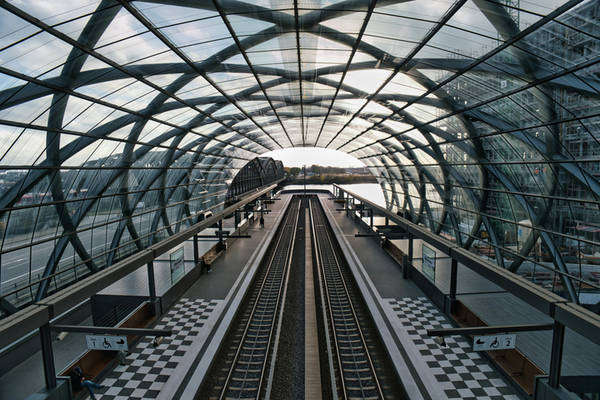 Railway
Industry Leaders Call On Government To Improve Railways Bill To Support Economic Growth & Investment
Rail Business Daily•Jul 7, 2026•4 min Railway
Ciro Delivering Operational Performance Learning Suite Wins Railway Innovation Award
 Rail Pro•Jul 7, 2026•4 min
 Railway
Lower Saxony Line, Public Consultation Phase
Railway Pro•Jul 4, 2026•3 min Railway
Public transport data as a key element of environmentally sensitive mobility management
Urban Transport Magazine – Rail/Metro•Jul 4, 2026•8 min Railway
Governments Allocate Eur 228 Million For Island'S Railway Network
 Trackopedia•Jul 4, 2026•2 min
 Railway
2026/27 Budget Allocates Around Eur 2.2 Billion For Transport Infrastructure
Trackopedia•Jul 4, 2026•1 min Railway
Public Transport: How To Do More With Less
Rail Express•Jul 4, 2026•8 min Railway
Hitachi Rail Completes Acquisition Of Clever Devices
Railway Pro•Jul 4, 2026•4 min