factoryfactory
Automation In Manufacturing Will More Than Double By 2030: Pwc
By Manufacturing Dive•02-28-2026February 28, 2026•3 min
Manufacturing Dive•02-28-2026February 28, 2026•3 min factory
The race is on for manufacturers looking to enable AI and automation across their operations to boost efficiencies or create growth opportunities across the $16 trillion sector, but not everyone is starting from the same place.
There is a widening gap between the “future-fit” companies and those falling behind due to poor data quality, skills gaps or fragmented systems, Ryan Hawk, global and U.S. industrials and services leader at PwC and author of the manufacturing outlook, said in an email. The gap could grow further as technology and capability advantages build on one another.
“The question is no longer whether companies will adopt new technologies, but how fast they can integrate them,” Hawk said. “As automation becomes ubiquitous, the advantage shifts from who has tools to who can orchestrate them across the enterprise.”
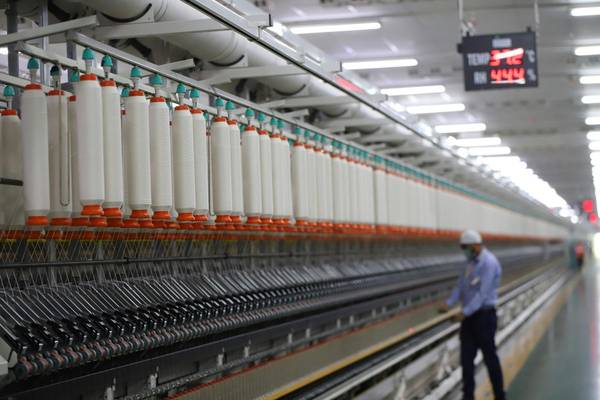
Automation of key business processes, such as data capture and analytics and physical production, is set to boom. According to PwC, adoption of highly automated processes will nearly triple by 2030, extending from the front and back offices to research and development and the shop floor. Survey results show a more even distribution of technology enablement across the value chain, not just in production/operations.
Hawk said this even spread was “most eye-opening.” It signals a fundamental shift toward AI-supported engineering, digital twins and more simulation-driven development, “not just smarter factories,” he said. There’s also growing interest in sensor technologies and physical AI.
As technology enablement and automation surge, manufacturers are looking beyond their core products for ways to generate revenue. They are positioning themselves as providers of “integrated solutions” that combine hardware with software, data, services and technology support, Hawk said. Deere & Co., for example, has been moving beyond equipment toward a digital platform that helps farmers make faster, better decisions.
“Instead of simply shipping equipment, they’re looking to own more of the lifecycle from predictive maintenance to data-driven optimization,” he said. “In many cases, that requires ecosystem collaborations and new capabilities that didn’t sit at the core of the organization five or 10 years ago.”
PwC survey respondents are expecting “fully 44%” of their companies’ total revenue to come from outside of manufacturing industrial or consumer products by 2030. The top three “growth hotspots” are technology, digital and communications products and services; defense, governmental and educational offerings; and energy and fuel production and distribution.
Fostering a strong company culture is also important for manufacturers on their adoption journeys. When leaders are confident about their digital transformation, but their frontline teams do not feel safe or supported in learning new skills, adoption slows, Hawk said.
To bridge the gap, manufacturers need to communicate effectively on how roles will change, invest in upskilling and create environments that encourage experimentation, he said. “Companies that treat workforce readiness as a core pillar of their automation strategy will be far better positioned to turn technology ambition into measurable performance gains.”
Recent Comments
0
Loading related news…