Ammonia vs Co2
By Plumbing and HVAC News•February 11, 2026•7 min read
Plumbing and HVAC News•February 11, 2026•7 min read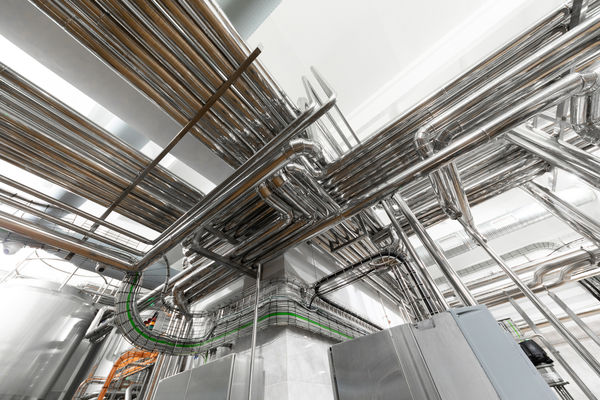
By
Over the years, there has been an increased usage of CO2 as a refrigerant. In Canada, the more traditional CO2 refrigeration market has been grocery stores. It’s difficult to get accurate data, but there has been a fairly high adoption rate of CO2 amongst grocers. The more interesting, more rapid changes are happening on the opposite end of the refrigeration spectrum — small commercial units and large industrial systems.
In industrial applications, like food processing, CO2 is taking market share that used to belong to halocarbons, particularly in locations where the toxicity component of ammonia is undesirable. It is also taking market share from ammonia systems because of the perceived lower ongoing safety and operations costs. This is really apparent in jurisdictions that have operator requirements which increase the operation costs for ammonia disproportionately. Operators are expensive and difficult to find; in some jurisdictions, this is quite literally the only design requirement we hear from clients — “Do what you think is best, but NO operators.”
Incidentally, I presented on this topic at the Canadian Society for Chemical Engineering (CSChE) conference in Montreal last May and spoke at length about what I believe is a serious and unfortunate disconnect between regulation and actual safety in the current and proposed operator requirements throughout Canada. If that presentation ever gets turned into a paper, I will certainly share a summary of it here.
In any case, I get asked a lot about how to make the decision on which refrigerant to use in many of these applications. Of course, it always depends, but here are a few generalizations, in my opinion. And they are just that, my opinions only. The one caveat I will mention now is that in all these cases, I’m assuming the CO2 system is “industrial,” which I will explain further on.
In short, for standard cold storages, ammonia and CO2 are both good options. Generally speaking, the refrigeration loads for small and medium-sized cold storages fall within a range that works well with both a multi-compressor CO2 rack and a small ammonia system.
Loads in most cold storages don’t change quickly, and they vary season to season requiring operation in low loads. The larger the cold storage, the more I would tend to go with ammonia. CO2 rack systems have some advantages in low load operation, and they tend to be good in a lot of medium/smaller applications. From an energy perspective, the most recent detailed energy study I was involved with showed that in a climate like Edmonton, Alta., there is effectively no difference in annual electricity consumption between the two refrigerants in a cold storage environment.
There is, however, a higher electrical demand for CO2 because of its higher energy use in the summer.
Ammonia has an advantage with ice rinks, but CO2 is good, too. Ice rinks are often affected by two additional design considerations in Canada. There are energy code regulations introducing requirements to perform heat recovery in several jurisdictions, and arenas have a “closeness” to the public that most industrial facilities don’t.
Here, my opinion is that ammonia has an advantage that stems from the simplicity of its operation. With proper maintenance, a system using one or two reciprocating compressor systems with a plate and frame heat exchanger can be made almost bulletproof from a function standpoint. If it is designed and commissioned properly and then well maintained, the system will last almost forever. CO2, on the other hand, requires more complex controls and, even though they have dramatically improved, the compressors are more susceptible to failure.
On the other hand, there are advantages to doing heat recovery with CO2, on top of the lower toxicity. CO2 can also gain some significant efficiencies if you are doing a direct CO2 floor. A method/installation that I personally think is really interesting.
Ammonia is generally best, but CO2 has some great applications for process cooling. Process cooling is the most complicated to discuss. I think there are generally two factors that influence whether ammonia or CO2 is the better choice — size and variability. Size is self-explanatory: the bigger the system, the more likely ammonia is the better solution. This is primarily a function of the size of compressors and components that are easily available.
Variability, in this context, is a measure of how fast loads on the system change. The example I often use is a French fry tunnel freezer. If you’ve ever seen one of these in a large fry plant, you know that they can be huge; hundreds of tons of refrigeration at -30 C or colder, hundreds or even thousands of horsepower.
These tunnels push the limit of evaporator coil heat transfer and almost always use pumped liquid refrigerant to maximize heat transfer efficiency. The product going through a tunnel is part of a process that includes many continuous steps in production. If any one of those steps has a problem, the product can stop moving instantly. When that happens, the refrigeration system goes from working extremely hard to needing almost no refrigeration in seconds. This causes wild swings in control valves, liquid surges in vessels, and rapid unloading of compressors.
It’s been my experience that ammonia systems, with their inherent simplicity and thermodynamic properties that are more conducive to better liquid/vapour separation, function more reliably in these applications. Spiral
freezers are similar, but since they are smaller and have longer dwell times, they don’t seem to be as affected. I’ve been involved with several CO2 spiral freezers that work really well.
Ammonia is also particularly efficient at the temperatures used for chilled process glycol, and a similar size and variability consideration can be applied to these types of systems. Large dairy and brewing applications are almost always better served by ammonia.
On the other hand, ready-to-eat (RTE) facilities that have a lot of room separation and separate temperature, cleaning, sanitation, pressurization, and load requirements in all of the spaces are more often better served by CO2. These facilities can be really large, but they require a lot of smaller evaporators.
Here, direct expansion (DX) CO2 can be employed really effectively to avoid the risk associated with so many evaporators in a production area. CO2 still requires leak detection and alarms, but it doesn’t contaminate the food if it leaks.
There is a very important distinction that needs to be made between a CO2 grocery store rack and a “proper” industrial CO2 rack. This comparison is often overlooked when it comes to the financial first cost comparisons. A grocery store rack system is often piped primarily in copper and copper alloys; it uses smaller oil separators, heat exchangers, and vessels. These systems are not designed for a 30 to 40-year life expectancy. A more industrial system, on the other hand, uses larger compressors, stainless steel piping, and often has much more conservatively sized flash tanks and superheat heat exchangers to help prevent the damage from liquid floodback.
There are obviously many other things to consider, but in general, I think that there are some really great applications for CO2, and we are starting to see a lot of success with it as a refrigerant in industrial settings. I am excited to continue trying to implement it wherever we get the chance. Ammonia, however, remains the powerhouse of large industrial refrigeration systems, at least for now.
0
Recent CommentsLoading related news…