RailwayRailway
Germany’S Rail Infrastructure Hits A New Investment Record
By Railway Pro•07-24-2026July 24, 2026•5 min
Railway Pro•07-24-2026July 24, 2026•5 min Railway
For the 2027–2030 period, Germany’s rail infrastructure has been given priority, receiving the highest level of investment compared with all other modes of transport.
Germany is preparing major investments in transport infrastructure, with a significant focus on Germany’s rail infrastructure. By 2029, the Federal Government intends to allocate approximately EUR 169 billion for transport infrastructure, including railways, bridges and roads.
The programme aims to reduce traffic congestion, develop a modern and integrated transport network, and strengthen the role of rail in reducing transport-related emissions.
Investments will be financed through the federal budget and the Special Fund for Infrastructure and Climate Neutrality (SVIK), valued at EUR 500 billion. The fund is divided into three components: EUR 100 billion for the federal states and local authorities, EUR 100 billion for the Climate and Transformation Fund (KTF), and EUR 300 billion for additional federal investments. The funding will be available over a 12-year period.
Through this special fund, “we are now investing more than ever in the strength and long-term development capacity of our country. (…) We are making modernisation of the rail system possible and ensuring that people can get to work on time. We are investing in digitalisation, healthcare, climate protection and modern infrastructure in all areas of our country,” said Lars Klingbeil, Federal Minister of Finance and Vice-Chancellor of Germany.
Through SVIK, Germany is allocating EUR 16.3 billion this year for the maintenance of Germany’s rail infrastructure. The funding is intended to preserve and modernise the existing network, ensuring the capacity, safety and functionality of railway lines.
The programme includes maintenance and renewal measures across Germany’s rail infrastructure, enabling the network to meet growing transport demand and long-term modernisation objectives.
Under the national transport investment plan for 2027–2030, Germany’s rail infrastructure receives the largest allocation of funding among all transport modes.
In 2026, Germany is investing approximately EUR 33.7 billion in transport infrastructure covering the rail, road and inland waterways sectors. This represents an increase of around EUR 7 billion compared with 2024, when transport investment totalled approximately EUR 26 billion.
Under the federal budget adopted in July, transport investment remains at a high level. Around EUR 170 billion has been allocated to transport projects for the 2025–2029 period, representing an annual average of approximately EUR 33 billion.
The rail sector receives the largest share of this funding. More than EUR 84 billion will be invested in Germany’s rail infrastructure between 2027 and 2030, including EUR 21.9 billion in 2026, EUR 20.8 billion in 2027, and EUR 63.4 billion during 2028–2030. The funding will support the modernisation, maintenance and expansion of Germany’s rail infrastructure.
Planned investments in Germany’s transport infrastructure (in million EUR)
According to the government, the investment strategy follows the principle of “maintenance before new construction”, while also ensuring sufficient funding for the construction of new railway lines.
Digitalisation is one of the main pillars of modernising Germany’s rail infrastructure through the deployment of ETCS and other digital technologies to increase network capacity, safety and efficiency. The objective is to create a more reliable and interoperable railway system capable of meeting growing transport demand.
To accelerate this process, Germany has established the ERTMS Coordination Office, responsible for coordinating the digital modernisation of Germany’s rail infrastructure and equipping trains with technologies such as ETCS. The office will oversee project implementation and funding coordination, with the aim of increasing network capacity, improving punctuality and enhancing operational reliability through real-time communication between trains and control centres.
Through the Special Fund for Infrastructure and Climate Neutrality (SVIK), Germany is allocating EUR 2.45 billion in 2026 to equip Germany’s rail infrastructure and rolling stock with ERTMS. The investment supports the deployment of ETCS and other digital technologies designed to improve the safety, efficiency and interoperability of the German railway system with the European rail network.
For Deutsche Bahn, digitalisation remains a strategic priority. Through the Digital Rail for Germany (Digitale Schiene Deutschland – DSD) programme, the company is developing Germany’s rail infrastructure using digital signalling, digital interlockings, ETCS and Automatic Train Operation (ATO). In the coming years, Deutsche Bahn will continue integrating digital systems into both infrastructure and rolling stock. One of the flagship projects is the Stuttgart Digital Rail Hub, where infrastructure and trains are being prepared for fully digital operations.
Deutsche Bahn is accelerating the modernisation of Germany’s rail infrastructure. In 2026, DB InfraGO, together with the Federal Government, plans to invest more than EUR 23 billion in the rail network and railway stations.
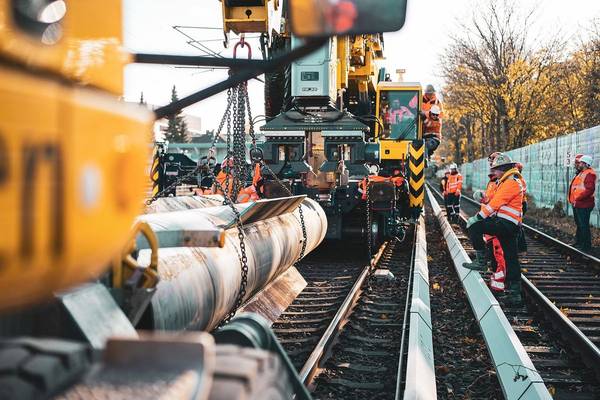
The investment programme covers the renewal and maintenance of existing infrastructure, the modernisation of railway lines, control systems and other essential network components. More than 28,000 maintenance and upgrade projects are scheduled across Germany’s rail infrastructure in 2026, including work on tracks, signalling systems and other railway assets.
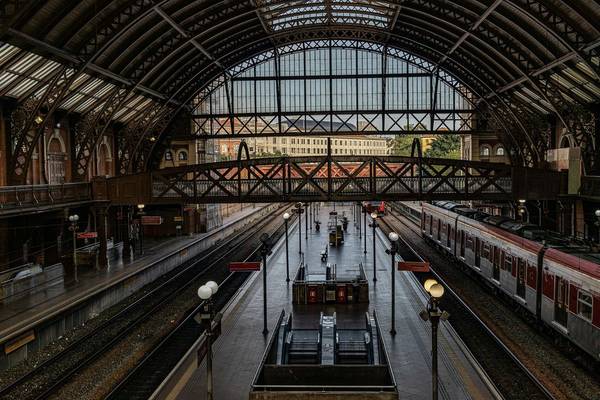
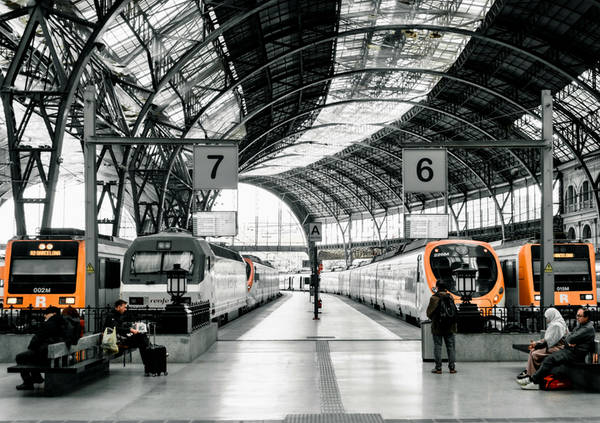
In the longer term, Deutsche Bahn aims to transform Germany’s rail infrastructure into a high-performance network by renovating key corridors, modernising stations and implementing the “Stations of the Future” concept. DB InfraGO manages approximately 33,400 km of railway infrastructure and around 5,400 stations, forming the backbone of Germany’s long-term rail modernisation programme.
In July, the German Parliament approved the Infrastructure Future Act (Infrastruktur-Zukunftsgesetz), designed to accelerate planning and approval procedures for strategic transport and energy projects.
The legislation gives priority to strategically important investments, reducing approval times and enabling faster delivery of major infrastructure projects.
“We are investing billions of euros in infrastructure. We must plan, authorise and build more quickly. With the Infrastructure Future Act, the Federal Government is finally providing authorities and companies with speed, clarity and predictability, so that modernisation and expansion works reach where they are needed: on the country’s roads, bridges, railways and waterways,” said Federal Minister of Transport Patrick Schnieder.
The law facilitates projects such as new railway lines, motorways, inland waterways and the replacement of ageing bridges by granting them priority status during approval procedures. In addition, the digitalisation of approval processes could shorten individual stages by up to 30%.
Recent Comments
0
Loading related news…