RailwayRailway
The New Era Of Rail Standards In Australia
By Rail Express•07-15-2026July 15, 2026•5 min
Rail Express•07-15-2026July 15, 2026•5 min Railway
The Australian rail industry is undergoing a significant transformation in how standards are developed, implemented, and harmonised across the nation.
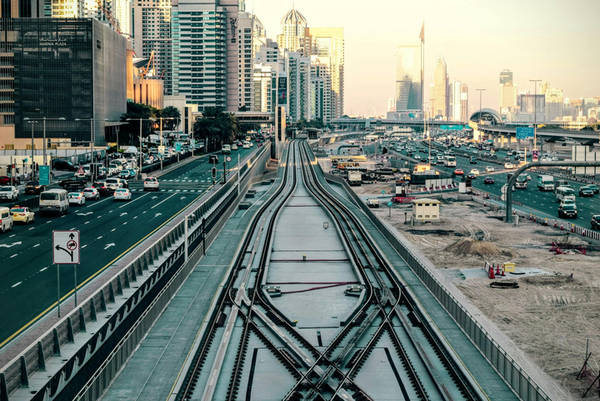
In a recent Q&A session, Australian Rail Industry Standards Organisation (ARISO)‘s industry experts Sudha Niles, General Manager – Products & Innovation and Crispian Fitzhardinge, Senior Standards Development Manager, discussed the implications of the emerging three-tiered national rail standards framework and its potential impact on various aspects of rail operations, including turnouts: “the hardest working, most safety-critical feature of any railway”.
The new standards framework consists of three distinct tiers:
These are legislated standards that carry direct legal implications. Currently, three areas are being considered for mandatory standardisation:
· Digital Train Control Technology (ETCS – European Train Control System)
· Streamlining rolling stock approval processes
· Driver interface (in-cab design)
Harmonised standards represent a middle ground. Developed with industry by ARISO (formerly RISSB), these standards may be supported by legislative instruments, though they may offer more flexibility in implementation than mandatory standards.
These remain jurisdictional or organisation-specific standards that address unique operational requirements not covered by the higher tiers.
Crispian emphasised the safety-critical nature of turnout infrastructure and said that ensuring turnout standards are up to date is important to ARISO.
“Turnouts are the hardest working, most safety-critical feature of any railway,” he said.
“On top of that, they also happen to be one of the few pieces of infrastructure that directly impacts all the other disciplines within the railway network. They impact rolling stock, train control systems, track infrastructure, the whole box and dice, which makes them a critical component of the railway system. So, the importance around design, construction, operation and maintenance can’t be overstated.”
The key driver for a performance-driven approach ensures that any harmonisation efforts are driven by clear, measurable outcomes rather than standardisation for its own sake. If the National Network for Interoperability (NNI) establishes specific performance requirements – such as end-to-end transit times, reliability metrics, or throughput capacity targets – then turnout designs may need to evolve to meet these standards.
Harmonised standards can facilitate easier movement of trained personnel between organisations and jurisdictions. Standardised training frameworks could address current barriers, where training completed in one organisation may not be accepted by another.
Crispian said this move would support the industry’s harmonisation agenda.
“A big part of that is to try and improve the mobility of skill sets across the country. So, if someone’s working on a turnout in Western Australia, they can go and work on a turnout in New South Wales. Currently, that’s difficult because of the bespoke ways of doing things.”
Consistent standards across jurisdictions can streamline manufacturing processes, reduce inventory complexity, and potentially lower costs through economies of scale.
The framework aims to encourage innovation whilst maintaining necessary consistency. Not all harmonisation delivers productivity gains, and excessive standardisation could stifle beneficial innovation.
Early consultations with ARISO industry standing committees have identified several potential priority areas such as a performance-based track classification system, corridor signage and on structural capacity in the movement of heavier and longer trains.
ARISO has developed a structured prioritisation methodology for determining which standards to harmonise first. This framework considers:
· Strategic value: How important is this standard to national objectives?
· Implementation feasibility: Can it realistically be implemented?
· Adoption commitment: Is industry willing to adopt it?
· Resource constraints: What can be accomplished with available funding?
This transparent approach ensures that harmonisation efforts focus on areas with the greatest potential benefit and industry support.
The harmonisation of rail standards in Australia represents a complex but necessary evolution. Whilst the immediate impact on areas like turnout manufacturing may be limited, the long-term trajectory points towards greater consistency driven by performance requirements.
As Crispian highlights, “As the industry-led national rail standards organisation, our standards are developed in collaboration with industry experts with operational insights. We want operators to be involved with the conversation in how the new standards are shaped. We are happy to hear from industry on how turnout maintenance currently looks for them and will use this to inform our work.”
As the framework develops, ongoing consultation with industry will be essential to ensure that harmonisation delivers genuine productivity benefits without unnecessarily constraining innovation or imposing unrealistic requirements on existing infrastructure.
Having recently chaired the successful West Coast Rail Turnouts event, ARISO’s Sudha Niles and Cris Fitzhardinge return to the upcoming East Coast Rail Turnouts event in Melbourne this July. Bringing their extensive experience and national perspective to the critical conversations around knowledge retention and special trackwork safety, they will discuss how the National Standards Framework will drive interoperability and harmonisation in track infrastructure and expand on many of the points raised here.
With a renewed focus on the transfer of industry knowledge and technical expertise, the workshop brings together leading industry experts to explore innovative solutions to the real-world challenges around reliability, resilience, maintenance, refurbishment and management.
Joining Sudha and Crispian at the interactive workshop are industry leaders including Amy Lezala, Chief Engineer – Rail, at the Department of Transport & Planning Victoria, Alex McGrath, Senior Advisor Rail Technologies at the National Transport Commission & Luke Pleasance, Track and Civil Engineering Manager – ARTC.
Learn more and register your tickets here.
Recent Comments
0
Loading related news…