railwayrailway
Bozankaya Excluded From A Train Tender In Poland Due To New Eu Rules
By Railway Pro•06-17-2026June 17, 2026•5 min
Railway Pro•06-17-2026June 17, 2026•5 min railway
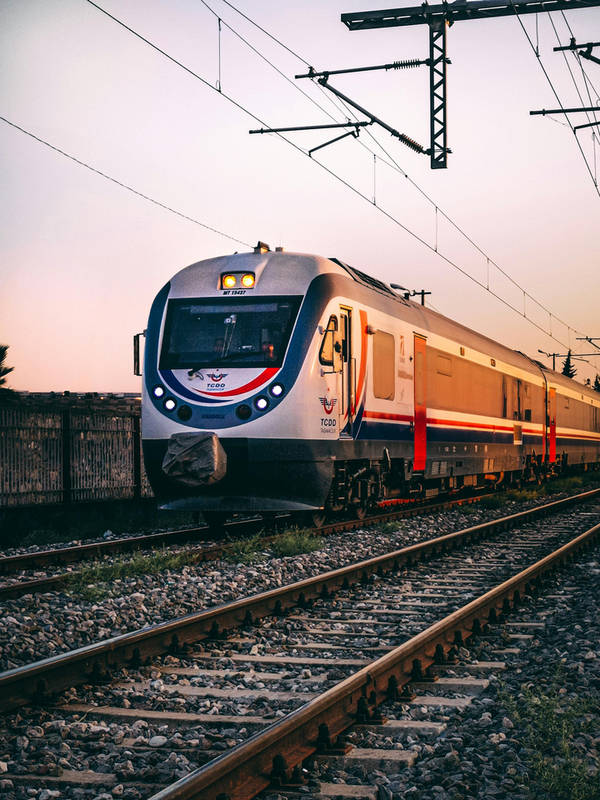
Turkish manufacturer Bozankaya has been excluded from a tender organized by the Polish regional operator Koleje Dolnośląskie for hybrid trains. The decision comes at a time when the European Union is tightening access for companies outside the bloc to public contracts, following several cases that have specifically targeted Chinese manufacturers.
The Turkish manufacturer Bozankaya A.Ş. has been excluded from a tender for the supply of hybrid trains in Poland, in the context of new European rules regarding access to public contracts for companies outside the European Union.
The procedure is being conducted by Koleje Dolnośląskie, the regional operator in the Lower Silesia Voivodeship, and involves the procurement of 4 hybrid trains, with an option for up to 16 additional units.
The tender covers hydrogen- or BMU-powered electric trains, and all prototypes must undergo a one-year testing program on the Polish rail network before entering commercial service.
Following Bozankaya’s exclusion, PESA Bydgoszcz, Siemens Mobility, and Škoda Group remain in the running.
According to Railtarget, the Polish operator justified the exclusion of the Turkish manufacturer by citing new European rules that allow contracting authorities to limit or exclude bidders from third countries that do not have reciprocal trade agreements with the European Union.
Bozankaya is present on the European market primarily in the tram segment. The company has delivered vehicles in Romania, to Timișoara and Iași, and is carrying out a contract for Naples, in Italy.
The case in Poland shows, however, that access for non-EU manufacturers to European public contracts is becoming increasingly dependent not only on price and technology, but also on the commercial and geopolitical framework in which those companies operate.
The decision comes after several cases in which the European Union has scrutinized or restricted the participation of Chinese manufacturer CRRC in public procurement procedures in the rail sector.
In 2024, CRRC withdrew its bid for a train contract in Bulgaria following a European Commission investigation into alleged state subsidies. Subsequently, the company was also excluded from a tender for 12 trams in Lisbon, after European investigators concluded that state financial support had enabled it to submit an unusually low bid.
Starting in 2023, the European Union began tightening market access rules, particularly in response to the aggressive expansion of state-backed manufacturers from outside the EU.
At a European summit on competitiveness, the Austrian railway industry association VBI called for public procurement of rolling stock to include a mandatory condition that at least 50% of the value added be generated within the European Union.
The legal basis for some of these interventions is the EU Regulation on Foreign Subsidies. The instrument aims to prevent companies receiving financial support from third countries from gaining an unfair advantage in the European market.
The regulation provides for the review of public procurement procedures with a value of at least EUR 250 million, as well as transactions involving firms with an EU turnover exceeding EUR 500 million.
The stated objective of the regulation is not to completely block companies from outside the European Union, but to ensure a level playing field. If Brussels finds that foreign financial support distorts competition, the European Commission may impose corrective measures or block the award of the contract.
The European Commission also monitors acquisitions of European companies by foreign investors.
Under the same regulation, a transaction may be investigated if the target company, one of the parties to the merger, or a joint venture generates a turnover of at least EUR 500 million in the EU and has received over EUR 50 million in foreign government support in the last 3 years.
CRRC has previously managed to enter the European market through local partnerships. In Romania, the Chinese manufacturer won the contract for 100 trams in Bucharest, in a consortium with the Romanian manufacturer Astra Vagoane Călători. In Germany, however, authorities rejected CRRC’s bid for 45 trams in 2020 after determining that localization requirements had not been met.
According to UNIFE, the European rail supply industry association, CRRC participated in 7 procurement procedures in the EU between 2011 and 2018 and won them all. Most of these were relatively small contracts for freight cars, locomotives, trams, and diesel railcars.
The most significant was a EUR 190 million contract for electric trains awarded by the Czech operator Leo Express, but the agreement was terminated in 2022.
Bozankaya’s exclusion from the Polish tender indicates that European railway procurement policy is entering a new phase.
What began as a reaction to competition from state-backed Chinese manufacturers is gradually evolving into a broader framework regarding access for non-EU companies to the European rolling stock market.
For European manufacturers, these rules are presented as a form of protection against competition supported by foreign subsidies. For companies outside the European Union, access to public contracts in Europe increasingly depends on conditions of reciprocity, financial transparency, and compatibility with the bloc’s trade rules.
Recent Comments
0
Loading related news…